
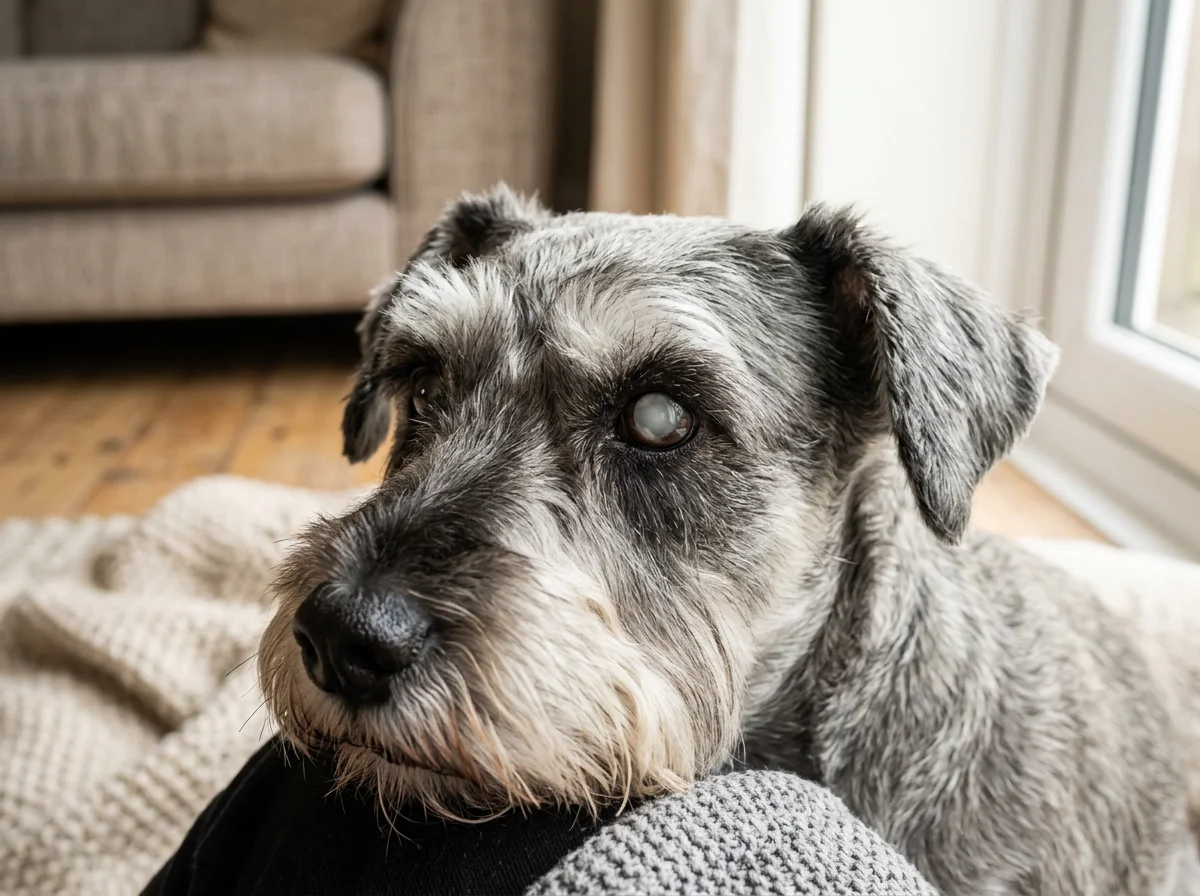
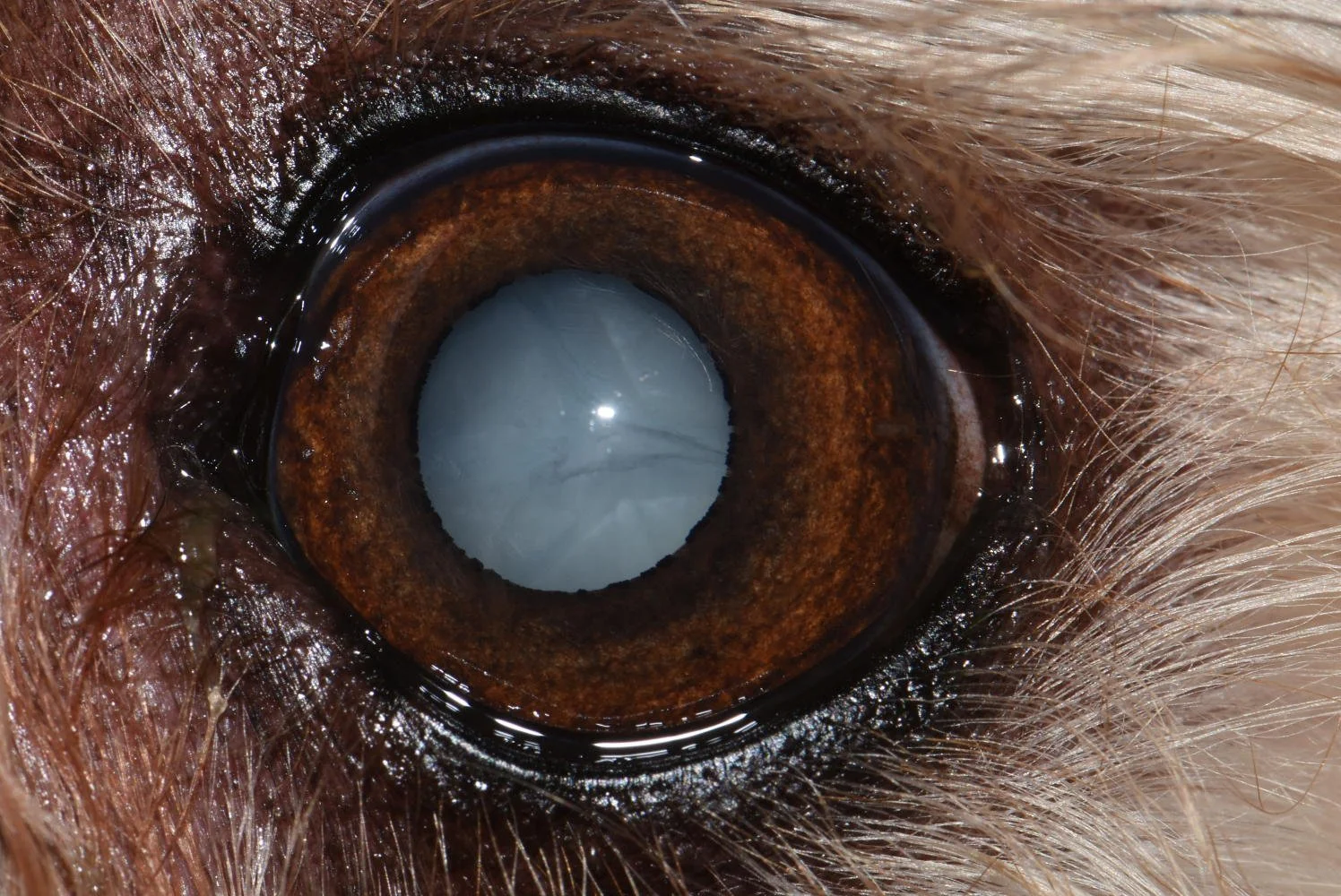
Why do cataracts develop after the onset of diabetes and why do they cause so much trouble?
It is primarily the leakage of lens proteins through the lens capsule that triggers anterior uveitis (specifically lens-induced uveitis) in diabetic dogs.
However, the sugar (glucose) in the aqueous humor plays a vital role as catalyst in the process. High blood glucose leads to elevated glucose levels within the aqueous humor (the liquid in the front of the eye). The lens absorbs this excess sugar and converts it into sorbitol. Sorbitol cannot easily escape the lens and acts as an sponge, rapidly pulling water inside of the lens. This causes the lens to swell like a balloon.
As the lens fibers stretch and break apart under tremendous pressure of the rapidly swelling lens, lens proteins begin to seep out of the tiny tears in the intact capsule (the membrane that sequesters the lens from the rest of the body). In severe cases, the swelling is so intense that the capsule physically ruptures.
These lens proteins are completely sequestered from the rest of the body and the immune system has never seen them before. When they start to leak into the anterior chamber (front of the eye), the dog's immune system treats them like they are a virus or bacteria. It begins to create a massive, painful inflammatory response to kill the intruders—resulting in the anterior uveitis that we can see.
The good news is that we can slow this damage down.
With prompt medical intervention, the cascade of damaging consequences inside the eye can be significantly delayed. This requires a two-pronged approach: working closely with your primary care veterinarian to initiate insulin therapy—which helps regulate the glucose levels in your pet’s eyes—and starting specialized topical eye drops prescribed by our team to target the sudden internal inflammation.
Because diabetic cataracts can change by the day, regular ocular examinations by a board-certified veterinary ophthalmologist are absolutely crucial. By catching micro-changes early, we can protect your pet's comfort, prevent severe secondary complications, and preserve their eligibility for life-changing vision-restoration surgery.